How to Make Money Clipping Videos in 2026 (Step-by-Step)
Article reviewed June 11, 2026 · Live figures updated hourly
Cut short clips from a creator's existing footage, post them to TikTok, Shorts, Reels or X, and get paid per 1,000 views. You join a “content rewards” campaign, follow its brief, post with the required tags, and get paid once you clear the payout threshold. Pay is modest — about $1 per 1,000 views at the median — so the real lever is picking the campaign paying the most right now.
Live data powering this page · updated hourly
- $1.25
- Median CPM
- $3.39
- Avg. CPM
- 592
- Campaigns
- 5
- Platforms
- $3,092,870
- Total budget
Aggregated live from every campaign we track across 5+ platforms. See the full CPM benchmarks.
Step 1 — Know what clipping actually is
You take existing long-form content (a podcast, stream, interview) and cut it into short, attention-grabbing verticals. You don't shoot original footage — you find the good moments and post. It's sometimes called “whop clipping,” but it now runs across many platforms.
Step 2 — Pick a niche you can clip daily
The top earners aren't the best editors — they're the most consistent in a niche they understand (gaming, finance/crypto, sports, music, podcasts). Finance and crypto advertise higher rates; entertainment is easier but more competitive. Start where you can post every day.
Step 3 — Pick a platform (neutrally)
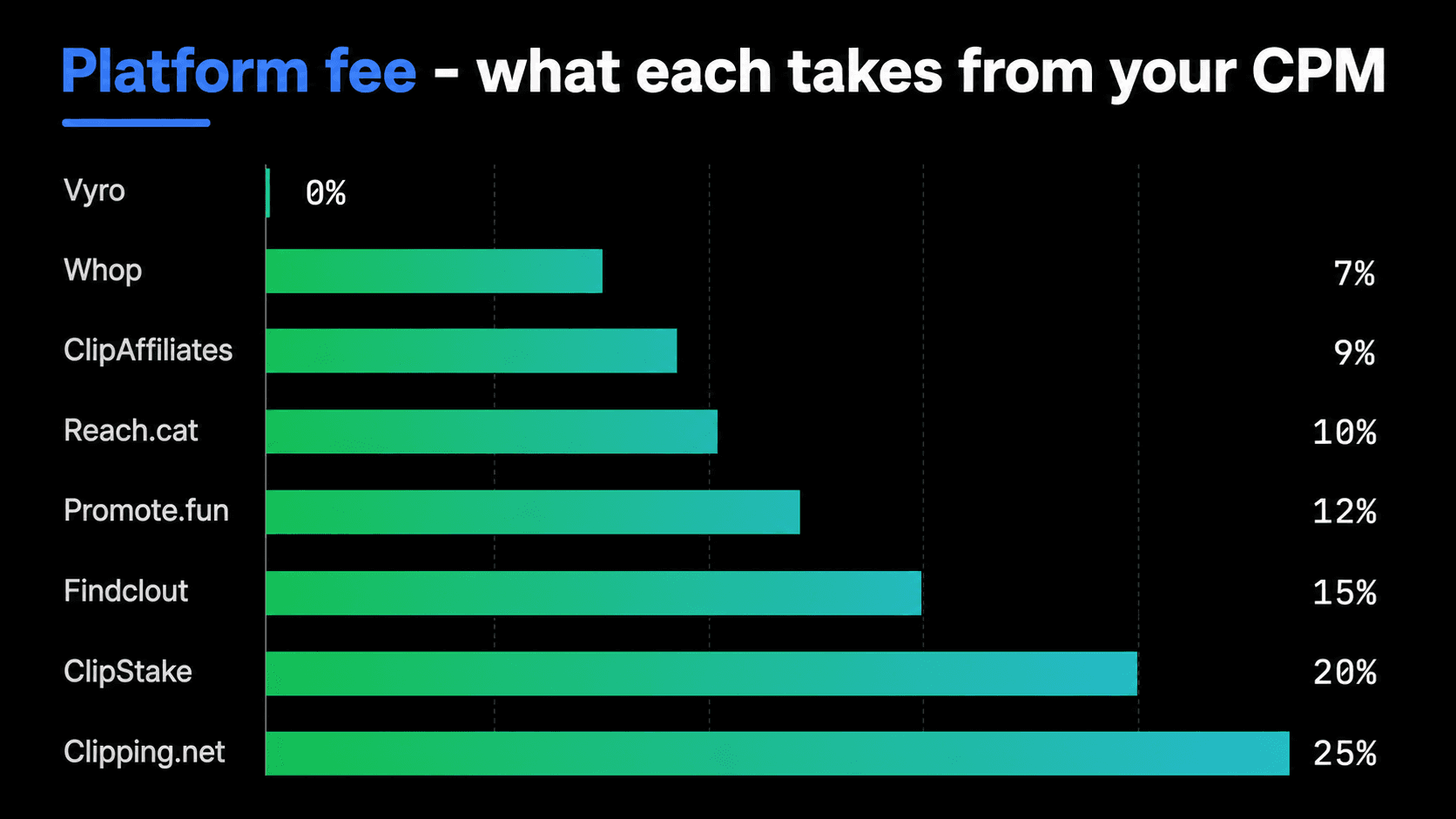
Platforms differ on three things that hit your wallet: fee (0–25%), payout speed (Net-7 to Net-30), and whether you can join instantly. Self-serve options like Vyro, Reach.cat, ClipStake, Promote.fun and Whop let you start fast. Compare them on the best clipping platforms hub instead of trusting any one site's self-ranking.
Step 4 — Find a live campaign worth your time
This is the step no platform's own blog can give you honestly — each only shows its own campaigns. Look across all of them and pick the one paying the most right now, with rules you can meet.
Check four things: current CPM, content rules, the minimum-view threshold, and the campaign's remaining budget so you're not clipping for a pool that's about to run dry.
Step 5 — Make the clip within the rules
Read the brief first. It sets the allowed platforms, length, tags and what's off-limits — clips that break the rules don't get counted.
Then cut a tight 15–60s vertical: strong hook in the first second, captions on, native to the platform. A free phone editor is enough — views come from clip selection, not production polish.
Step 6 — Post, then track your views
Post with the exact tags or link the brief asks for — that's how your views get tracked. Then watch which clips and niches perform and lean into what works. Volume across a few campaigns smooths out the randomness of any single clip flopping.
Step 7 — Get paid (thresholds, fees, timing)
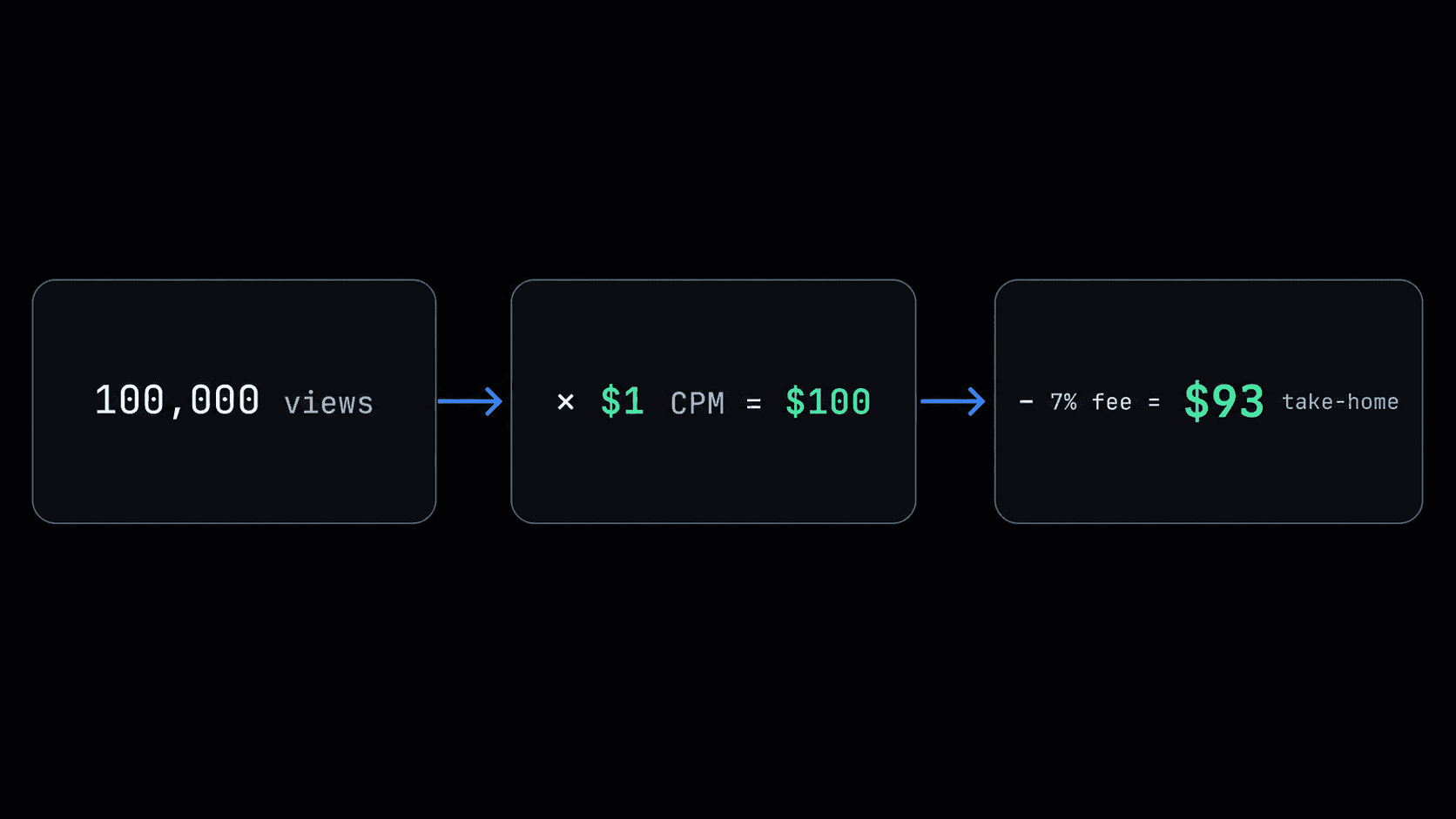
You cash out once you clear the platform's threshold — roughly $5 (Reach.cat) up to $50+ (application-based). Then the fee (0–25%) and payout speed (Net-7 to Net-30) decide what lands. At a ~$1 median CPM, clipping is a real side income, not a lottery ticket — see our honest “is clipping worth it” verdict for the full math.
Highest-paying clipping campaigns right now
Browse all live clipping campaigns →Skip the guesswork — find the best-paying campaign now
Sign in to Clipping Atlas to browse every live campaign ranked by take-home CPM across 9 platforms, so you always clip what's paying most right now.
Pick a high-paying campaign →Keep reading
Frequently asked
- Do you need editing skills to clip?
- No advanced editing skills are required. Clipping is mostly about spotting the best moment in existing footage and cutting a tight vertical short, which a free phone or desktop editor handles fine. The real skill is clip selection and writing a hook, not motion graphics.
- How does clipping work, exactly?
- You join a content rewards campaign on a clipping platform, read its brief, cut a short clip from the creator's or brand's footage, and post it with the required tags. The platform counts the qualifying views and pays you a set rate per 1,000 views (CPM). Once you clear the payout threshold, you withdraw via PayPal, Wise, Stripe, or crypto.
- Where do clippers get clips?
- From the campaign itself. Each campaign supplies or points to the source footage you're allowed to clip — a creator's stream, podcast, interview, or brand video. You work from the approved footage and follow the brief's rules; using off-brief footage usually means your views won't count.
- How fast do you get paid?
- It depends on the platform's payout terms. Faster platforms pay Net-7 (about a week after the period closes), while application-based platforms often run Net-30. You also have to clear the payout threshold first, which ranges from about $5 to $50+. Self-serve platforms with low thresholds and Net-7 payouts get you your first payment soonest.
- How much money can you realistically make clipping?
- Honestly, less than most hype suggests. Pay is per 1,000 views, and the median rate right now sits around $1 CPM, with niches like finance and crypto paying more. It's a legitimate side income for consistent posters running multiple campaigns, not a get-rich-quick scheme.